
Key things to know
- Report a missing or damaged bag at the airline’s desk in the reclaim area before leaving the airport, and get a Property Irregularity Report.
- Airlines usually cap compensation at around £1,000 depending on exchange rates, and payouts are based on the current value of items, not what you paid.
- Most airlines follow set deadlines: seven days to claim for damage, and 21 days for delayed or missing luggage.
- A travel policy, or home contents cover that extends to belongings away from home, may pay more than the airline for the same loss.
- If the airline will not respond, the Civil Aviation Authority’s complaints team may be able to take the matter up for you.
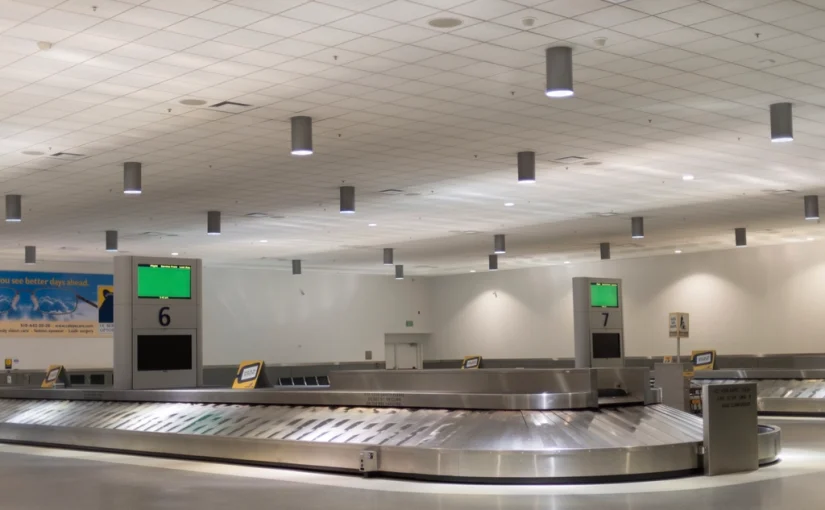
Few things take the shine off a trip faster than watching an empty baggage carousel go round one more time. When you check a bag in, the airline is responsible for it from that moment until you pick it up from the reclaim belt at the other end, so a bag that fails to appear is the airline’s problem as well as yours. What you do before you leave the airport, and the receipts you keep afterwards, will decide how easy any claim is later. This guide takes you through the steps in order, whether your bag is missing, late or has been taken by someone else.
First Steps: Report It Before You Leave the Airport
If your bag does not appear at reclaim, check with airport staff first. It may simply be delayed, perhaps because it missed a connection, and could be on a later flight. Report the problem at the airline’s desk in the reclaim area before you go anywhere else. You are not legally required to do this, but Citizens Advice points out that you are more likely to get compensation if you report straight away.
While you are at the desk:
- take a note of the baggage reference you are given
- get a copy of the airline’s report, or at least the reference for it
- keep the luggage tag sticker from check-in, which is usually attached to your boarding pass
If the baggage desk is not staffed, report online or by phone as soon as you can, and get the airline to confirm your report in writing.
Getting a Property Irregularity Report
Most airlines have a dedicated baggage desk in the reclaim area, and staff there will complete a Property Irregularity Report, usually called a PIR. This is the document that records your report, and airlines normally ask for it when you make a claim. Ask for a copy before you leave the desk, and keep it somewhere safe.
Two points matter here. First, a PIR on its own does not mean the airline will accept your claim. Second, reporting the problem is not the same as claiming compensation. Unless the airline pays something upfront, for example expenses while your bag is delayed, you will normally still need to submit a separate claim afterwards.
If Your Bag Is Only Delayed
A delayed bag is the most common outcome, and airlines usually offer one of two things: a set amount per day until the bag is returned, or repayment of the urgent items you had to buy, as long as you submit receipts. Rules differ between airlines, so ask what yours will pay.
The essentials that airlines most commonly reimburse are toiletries, underwear and laundry costs. If your bag was delayed on your return home, the airline may take the view that your losses were smaller, since you had clothes and other items waiting for you at home. If you have to travel to collect the bag yourself, you may be able to recover reasonable transport costs.
Keep every receipt, dated and itemised, and keep them together. A bag that turns up after a few days does not end the matter: you can still claim for the delay if it is returned within 21 days. Many airlines ask for claims within seven days of your flight for some problems, so check the deadline with your carrier rather than assuming.
If Your Bag Has Been Stolen
Theft is treated differently from a bag the airline has misplaced. If items were taken from your hold luggage or your room, your insurer will tell you what evidence it needs to support a claim, so ask before you buy replacements. For cabin baggage, the position with the airline is narrower: you can normally only claim where the airline itself was to blame, for example damage or loss caused by its staff.
Check your policy’s rules on single-item limits and valuables before you travel, because policies commonly cap what they will pay for any one item. Where money comes up in a claim, insurers usually expect you to show what the items were worth.
What Travel Insurance Usually Covers, and What It Doesn’t
Travel policies typically include a baggage section covering lost, stolen or damaged items, but every section has its own limit and its own excess, the amount you contribute towards a claim. Citizens Advice points out that a travel policy, or a home contents policy that covers belongings away from home, is often the better route: payouts tend to be higher and claims tend to be simpler to run.
The contrast with airline compensation is worth understanding. Airlines usually pay the current value of items, reduced for wear, not what you originally paid, and they will not usually pay new-for-old replacement. They also commonly refuse to pay for valuables, fragile or perishable items packed in checked luggage, or for stress, inconvenience and knock-on problems such as a missed connection. If you are unsure how a decision was reached, our article on what to do when an insurance claim is rejected sets out your options for challenging it, and how to make an insurance claim explains the process from start to finish.
Documents You Need to Support a Claim
Whichever route you take, the same paperwork does the work. Gather:
- your copy of the PIR, or written confirmation that you reported the problem
- the baggage tag sticker and boarding pass
- an itemised list of what was in the bag, with values
- dated, itemised receipts, or other evidence if you no longer have them
- photographs of any damage, and of the bag itself
If you no longer hold receipts, the Civil Aviation Authority suggests providing details such as the manufacturer’s name, the product name, its cost and its age, along with product information from the manufacturer’s website. When you submit receipts, redact any visible banking details.
Worth doing: Label your bag inside as well as outside. Adding your name, address and email address inside the case helps if the external tags are lost.
Claiming Against the Airline as Well as the Insurer
Your legal right to airline compensation for checked baggage comes from the Montreal Convention 1999, an international agreement that sets the maximum amounts airlines may have to pay. The cap is around £1,000 depending on exchange rates, and it is a ceiling rather than an entitlement, so payouts are usually much lower. If your luggage is worth more than the cap, you can declare its value to the airline at check-in and usually pay a fee to make a special declaration covering expensive items in full.
If your journey involved more than one airline and the bag was tagged through to where you were headed, you can claim from any of them. The airline that operated the final leg usually handles the claim, so start there. If none of the airlines will take responsibility, they are not allowed to do that.
The usual deadlines most airlines follow are set out below. Check with your own carrier, because these are conventions rather than guarantees.
| Situation | What to do | Deadline most airlines use |
|---|---|---|
| Damaged bag or contents | Report at the airport, photograph the damage | Written claim within 7 days of receiving the bag |
| Delayed bag | Report at the airport, keep expense receipts | Claim within 21 days of the flight |
| Bag never returned | Bag treated as lost after 21 days | Claim within 7 days of it being declared lost |
If you have made a written complaint and are dissatisfied with the outcome, or have had no reply within 8 weeks, the Civil Aviation Authority’s Passenger Advice and Complaints Team may be able to help, although it can only take up your complaint rather than impose a solution. If your bag is missing right now, head to the airline’s baggage desk in the reclaim hall before you do anything else and ask for a Property Irregularity Report.
Questions answered
What is a Property Irregularity Report?
It is the form airline staff complete when you report baggage that is missing, delayed or damaged. Keep a copy, because airlines normally ask for it when you claim, though it is not a guarantee that they will accept the claim.
How long before a delayed bag counts as lost?
Airlines have 21 days to find a delayed bag and get it to you. If it has not been returned by then, it is officially treated as lost and you can submit a full loss claim.
Can I claim from the airline and my travel insurance for the same bag?
You can pursue both routes, but you cannot be paid twice for the same loss. Tell each party what the other has paid, and check whether your policy requires you to claim from the airline first.
Is cabin baggage covered in the same way as hold luggage?
No. For cabin baggage you can normally only claim from the airline when the airline itself was at fault, such as damage caused by its staff.
This guide is general information, not financial or insurance advice. Policies differ, so always read your own policy documents and check with your insurer. If you have a complaint, your insurer’s complaints process and the Financial Ombudsman Service can help.